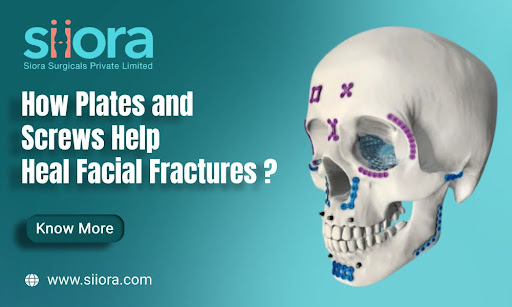
Facial injuries can be overwhelming, not just emotionally, but physically too. A broken facial bone affects more than appearance; it can interfere with eating, speaking, and breathing. Fortunately, there’s a modern medical solution that works wonders: Maxillofacial Plates.
These tiny but powerful tools, used with screws, help the face heal from fractures by holding everything together from the inside. Here’s how they work, explained in the simplest way possible.
What Happens When You Break a Facial Bone?
Think of your facial bones like a puzzle. When one piece breaks, the structure loses its shape and function. Just like you wouldn’t use tape to fix a shattered puzzle, external support isn’t enough for facial bones. You need something internal, stable, and strong — and that’s where plates and screws come in.
Plates and Screws: Internal Fixers
During a procedure, a surgeon repositions the broken pieces of bone and uses small plates and screws to hold them in place. Imagine fixing a cracked wooden picture frame with tiny brackets and nails — that’s essentially what’s happening inside your face.
These tools don’t just hold the bone still; they create the perfect conditions for natural healing by preventing movement and misalignment.
Why Titanium?
Most of the plates and screws used are made of titanium. Why? Because it’s strong, super lightweight, and the human body accepts it well. There’s no rejection, no allergic reaction — the bone simply heals with the help of this internal support.
Plus, titanium doesn’t interfere with MRIs or airport security scanners, which is a bonus for anyone who travels frequently or needs imaging done.
Do They Stay in the Body Forever?
In many cases, yes — and that’s perfectly fine. Once healing is complete, the plates don’t usually cause any issues and can be left in place for life. However, in younger patients or if the plates cause discomfort later, they can be removed with a relatively simple procedure.
What About Scars?
One common concern is scarring. The good news? Surgeons are incredibly skilled at hiding incisions. Most cuts are made inside the mouth or along natural creases of the face, which means visible scars are minimal or even non-existent.
Fast Recovery and Long-Term Results
Thanks to this technology, recovery is often quicker and smoother. Patients usually return to eating, speaking, and even smiling normally within a few weeks. The stability provided by plates and screws means the body can heal in the right position without constant re-adjustment or external supports.
Conclusion: Healing from the Inside Out
Plates and screws may be small, but their role in healing facial fractures is massive. They restore function, appearance, and confidence — all while being almost invisible. For anyone dealing with a facial injury, it’s comforting to know these tools are working quietly behind the scenes to bring everything back together.
To explore advanced CMF plates, spine implants, and other orthopedic devices along with cutting-edge healthcare solutions, register for the FIME Trade Show 2025.
 Siora Surgicals Pvt. Ltd.